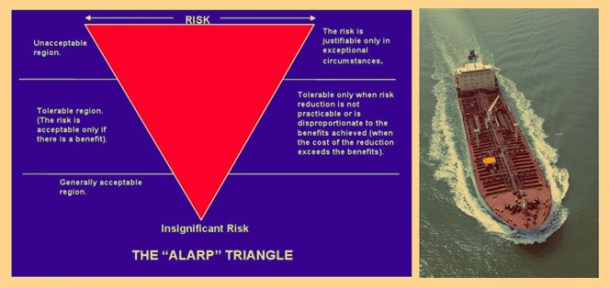
Recently IACS released guidance regarding Risk Assessment in Ship Operations. The development as well as the implementation of a safety management system also involves taking into consideration risk management. The development of a written procedure involves looking at the company’s activities and operations and identifying what could go wrong in order to decide what should be done to try to prevent it from being happening.
Paris MoU Structural Safety and Load Lines CIC Report 2011
The CIC was held between September and November 2011 and the report was approved by the 45th meeting of the Port State Control Committee in May 2012. The results of the CIC will also be submitted to the next meeting of the IMO Sub-Committee on Flag State Implementation.
In 4386 inspections carried out by the Paris MoU from the 1st of September to the 30th of November of 2011 on 4250 individual ships, a CIC questionnaire was recorded. 963 inspections (22% of the total number of CIC inspections) resulted in deficiencies related to the topic of the campaign. A total of 150 detentions (3,4%) were recorded during the CIC, of which 42 (1,0%) were due to deficiencies directly related to the CIC topic.
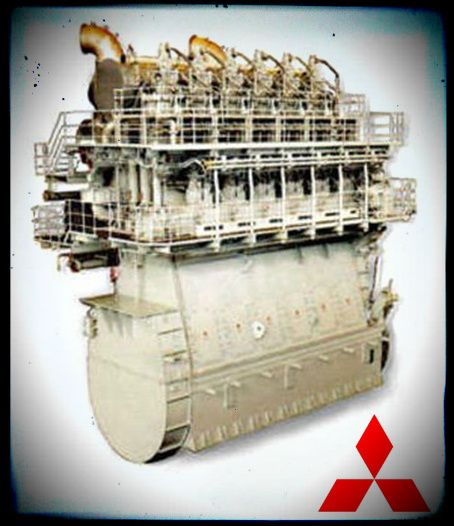
Low-speed, 2-stroke, Dual-fuel Marine Diesel Engine UEC-LSGi
Mitsubishi Heavy Industries, Ltd. (MHI) will begin developing “UEC-LSGi,” low-speed, dual-fuel, marine diesel engines capable of using not only conventional heavy oil but also natural gas for their fuel. The new engine will be added to the lineup of the Mitsubishi UEC Engine Series, the company’s 2-stroke, low-speed marine diesel engine brand. Scheduled to be launched onto the market in 2015, MHI aims to reduce the economic and environmental burden on ship operators.
SOLAS Amendments Came into Force on July 1st 2012
The following amendments to the regulations annexed to the International Convention for the Safety of Life at Sea, 1974 (SOLAS 74) adopted by Resolutions MSC.308(88) and MSC.309(88) came into force a few days ago: Regulation 41 of Chapter II-1, Regulations 1 and 3 of Chapter II-2, Regulation 7 of Chapter II-2, Regulation 18 of Chapter V, Regulation 23 of Chapter V.
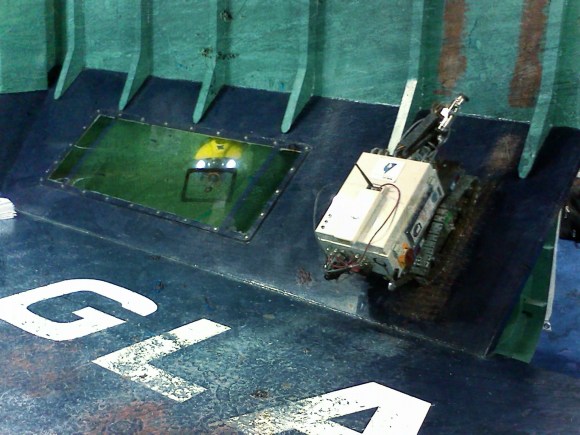
Marine Inspection Robotic Assistant System
The MINOAS project (Marine Inspection Robotic Assistant System) is an European project under development. The project’s aim is the re-engineering of the methods that are being followed during a vessel inspection. The project introduces the concept of having locomotive robots inspecting a vessel (e.g. a cargo hold) which are under the direct command of a human inspector. Using virtual reality the inspector is able to concept that integrates human personnel with high locomotion-enabled robots, effectively “tele-porting” the human inspector from the vessel’s hold to a control room with virtual reality properties.
Panama Canal Change in Toll System
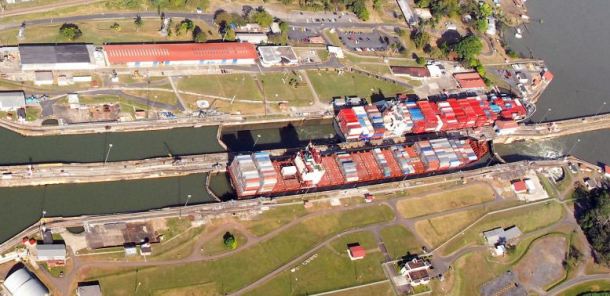
Last month we posted about the plans of the Panama Canal to increase toll chargers and the complaints expressed by the International Chamber of Shipping . Now the Panama Canal Authority’s Board of Directors, after carefully evaluating the observations and suggestions provided by interested parties, has considered it appropriate to adjust the original proposal to modify the tolls system of the Panama Canal.
Cargo Hold Fire on Board BBC Baltic
The Australian Transport Safety Bureau released today the completed investigation report regarding a fire within the cargo hold of a general cargo ship.
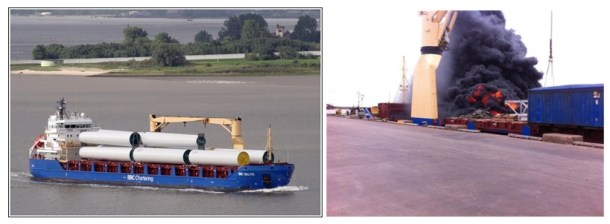
At about 16:05 on 26 January 2012, a fire broke out in the number one cargo hold of the general cargo ship BBC Baltic while it was discharging cargo in Port Hedland. At the time, workers from Cervan Marine, a local engineering company, were gas cutting in the cargo hold using an oxy-acetylene torch. The ship’s crew assisted by the local emergency services fought the fire and, by 16:25, had extinguished it. There were no injuries as a result of the incident and damage to the ship and its cargo was not serious.

(Source: Australian Transport Safety Bureau)
Interim Guidance on the Non-Availability of Compliant Fuel Oil for the North American ECA
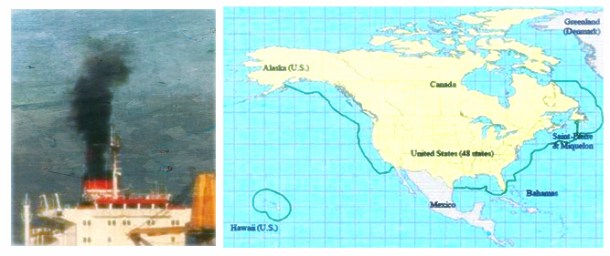
The U.S. Environmental Protection Agency released interim guidance for ship owners and operators clarifying how the U.S. government will implement fuel availability provisions when ships are unable to obtain fuel that meets standards protecting against sulfur pollution along the coast. Sulfur pollution has been linked to respiratory illnesses, particularly in at-risk populations including children, the elderly, and asthmatics. The International Maritime Organization (IMO) has officially designated waters off of the coast of North America, known as the North American Emission Control Area (North American ECA), as areas where stringent international pollution standards apply for ships, including fuel sulfur limits. The guidance provides background information on the North American ECA fuel sulfur standards, explains how owners and operators of vessels can establish compliance with these requirements, and describes how an owner or operator of a vessel who cannot obtain compliant fuel oil can make a fuel oil non-availability claim.
Day of the Seafarer 2012
25 June 2012 marks the second international Day of the Seafarer. On that day, IMO is asking people around the world to use social networks to highlight just how important seafarers are to everyone on the planet, as they transport all over the world those vital items, commodities and components which are so vital to all our daily lives.
So, on 25 June 2012, the Day of the seafarer, we ask you to tell the world, through your social media connections, about an object in your daily life that you can’t live without, and which came by sea. Take a photo, write a description, record a song, make a film, whatever you prefer: and then just post it on the social platform of your choice and add the campaign slogan: “thank you seafarers”.