The global sulphur cap of 0.5%, which the International Maritime Organization (IMO) will implement between 2020 and 2025 is expected to accelerate the adoption of LNG as fuel for shipping globally, provided that bunkering infrastructure is available. Corresponding developments for LNG bunkering and phasing-in of LNG fuelled ships have already started, although not in Australia.
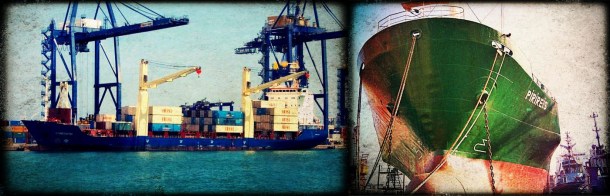
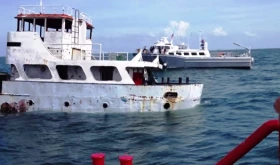
Cargo Ship Sinks after Colliding with Containership Southwest of Sapientza Island Greece
Cook islands flagged cargo ship Piri Reis, loaded with a cargo of fertilizer, sunk southwest of Sapientza Island in Greece (sea depth at the point of the accident is approximately 2.5 km) after colliding with Antigua & Barbuda flagged containership Consouth. The containership Consouth was not carrying cargo during the collision. The causes of the accident are still unknown.
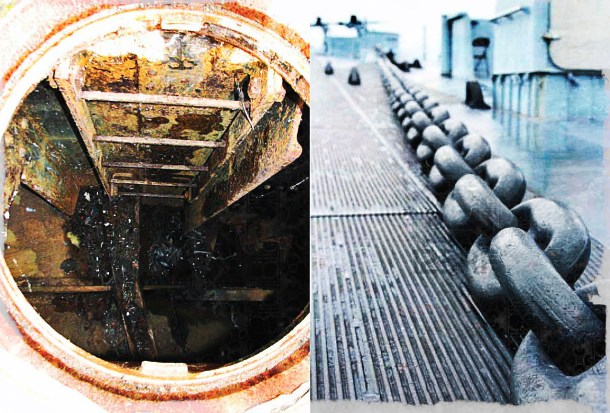
Fatal Accident During Inspection of Chain Locker
During routine inspection of the chain locker with chain on board a stern trawler, one member of an inspection team fainted during the inspection and died shortly after. A second member fainted during the rescue operation, but recovered. This incident onboard a 700 GRT stern Trawler in 1998.
IMO Work on Greenhouse Gas Emissions Estimate
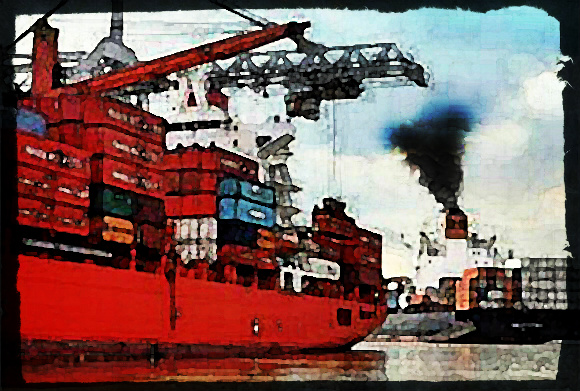
Work to update the greenhouse gas (GHG) emissions estimate for international shipping moved forward during an Expert Workshop at IMO Headquarters during 26 February to 1 March 2013. A final study is expected to be delivered in 2014. The second IMO GHG Study 2009 had estimated that international shipping emitted 870 million tonnes, or about 2.7% of the global man-made emissions of carbon dioxide (CO2) in 2007.
Cruise Ship Emissions and Control in Hong Kong
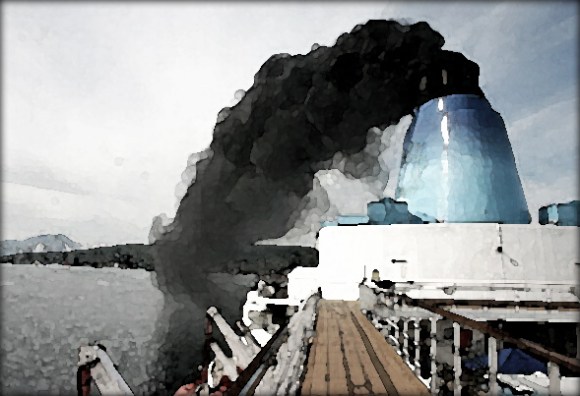
Civic Exchange released the previous month a new report entitled Cruise Ship Emissions and Control in Hong Kong. With the opening of Kai Tak Cruise Terminal in June this year, the current report aims to provide timely information regarding cruise ship emissions in Hong Kong for thorough discussions between the government, business sectors and the general public on the issues.
Explosion During Tank Cleaning Operation
A vessel was in ballast condition and undertaking tank cleaning prior to entering loading port. The crew was cleaning the No. 2 port cargo tank by spraying toluene from the top of the tank cleaning hatch opening into the tank. During the cleaning operation a flashback explosion occurred, killing one crew member and injuring another. This incident took place on a chemicals tanker in 1996.
Counterfeit Nautical Charts Warning by UKHO
The United Kingdom Hydrographic Office has issued a warning over the dangers posed to the safety of vessels, crews and cargoes by counterfeit nautical charts and publications and has produced a simple guide to help identify genuine Admiralty products.
ITF Releases Mobile Apps
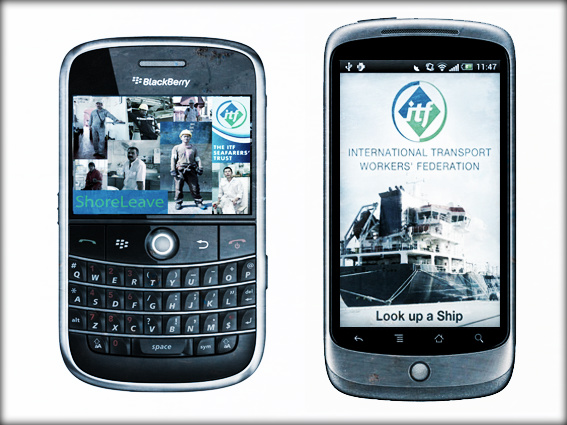
The ITF launched the previous month a series of free apps for seafarers. The Look up a Ship app will enable seafarers and charterers to look at basic information about the vessel they are sailing on, intend to sail on or are considering chartering. It will show the ship name, International Maritime Organization (IMO) number, where it is flagged, and whether or not it has an ITF agreement, and the status of any agreement. It will also show the latest crew list summary and ITF Inspection details.
Subsea Companies Across the UK Set to Grow in 2013
Subsea companies across the UK are set to grow by 20% or more in 2013, with some companies anticipating more than 50% growth. During last February a survey of Subsea UK members revealed that 100% of firms are predicting significant growth in the next 12 months. Almost half expect to grow by 30% and a third by more than 50%. Almost 90% of those surveyed saw turnover and profits rise in 2012 with over half reporting growth of 20% and a fifth reporting more than 50% growth.
MARPOL Annex VI Requirements for Technical and Operational Measures
During last February a very interesting article from Edmund Hughes, Technical Officer, Marine Environment Division, IMO was published in IMO’s website, explaining the new regulations aimed at improving the energy efficiency of international shipping, which entered into force on 1 January 2013 and make mandatory the Energy Efficiency Design Index (EEDI), for new ships, and the Ship Energy Efficiency Management Plan (SEEMP) for all ships. Other amendments to MARPOL Annex VI add new definitions and the requirements for survey and certification, including the format for the International Energy Efficiency Certificate. The regulations apply to all ships of 400 gross tonnage and above. However, under regulation 19, the Administration may waive the requirements for new ships up to a maximum of 4 years.