This incident information refers to ingress of water in immersion suits as a result of deteriorated glue. During survey for renewal of the Safety Equipment Certificate it was observed leakage on some of the immersion suits. The zipper had become detached from the suit in various places. The same was found at the connection of gloves to the suit. The immersion suits were estimated to be less than 10 years old.
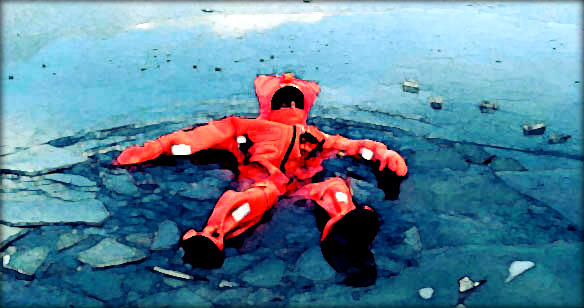
Information on Ingress of Water in Immersion Suits due to Deteriorated Glue
Will ILO MLC Deliver as Promised?
ILO Maritime Labour Convention (MLC), the so called “ILO Super Convention” is expected to enter into force on August the 20th as the 4th pillar of Maritime Regulatory Compliance along with SOLAS, MARPOL, STCW. As the clock is ticking towards the deadline let’s see if the MLC will deliver the promised land by examining some key issues involved.
Tanker and Bulk Carrier Collide off Galveston
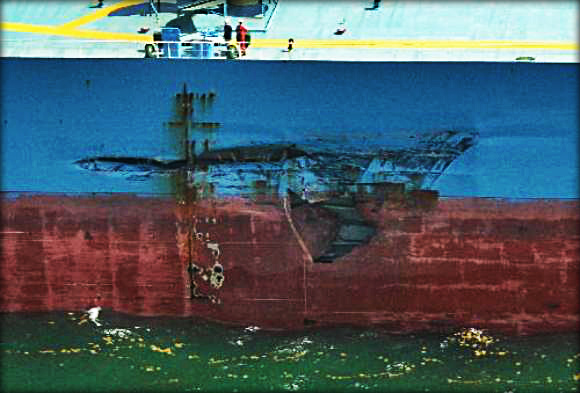
The Coast Guard is responding to a collision between two deep draft ships approximately 30 miles off the coast of Galveston today. There has been no report of injury or pollution from either vessel; however, both vessels are reporting damage but are in stable condition.
Davit Snapped During Lifeboat Drill
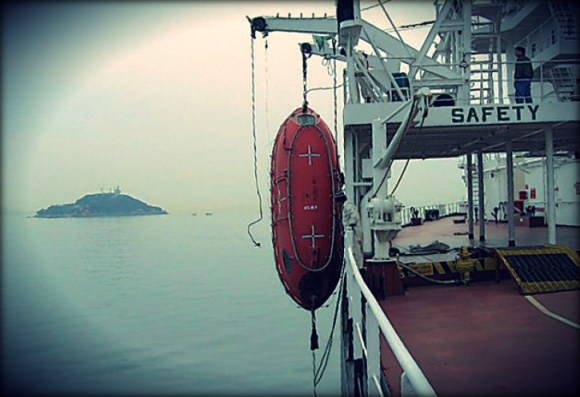
On lowering the starboard lifeboat during preparation for survey on behalf of a Maritime administration, the forward attachment to the davit snapped when the lifeboat was lowered. The lifeboat remained hanging vertically by the aft wire only. The aft deck of the lifeboat was found to be fractured in way of the connection to the falls.
Incident Information on Thermal Oil Heater Fire in the Funnel
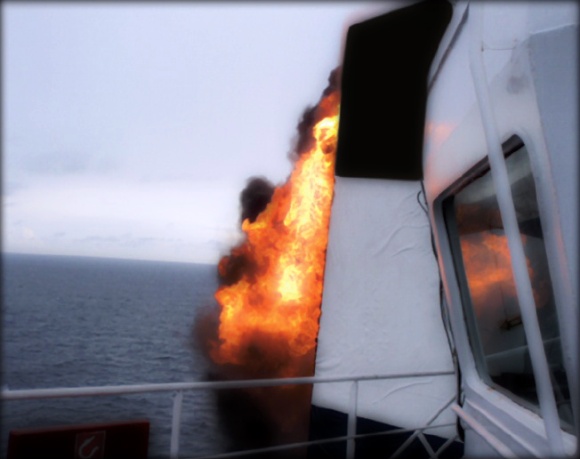
This incident is referring to a vessel which had an exhaust gas heated Thermal Oil installation. The thermal oil circulating pump stopped and the stand-by pump did not start. No alarm indicating abnormal condition was given. The thermal oil system temperature and pressure increased until the safety valve directed the oil into the compensating (expansion) tank. The expansion tank overflowed (again no alarm was given) through its air vent head. The air vent head was mounted inside the funnel, close to the exhaust pipes. An explosion was heard from the funnel followed by a fire.
TOKYO MoU New Inspection Regime from January 2014
At the 23rd meeting of the Port State Control Committee in Singapore last month, the Memorandum of Understanding on Port State Control in the Asia-Pacific Region (Tokyo MOU) decided to introduce a New Inspection Regime (NIR) for selection of ships from 1 January 2014.
Engine Worn Out by Catalytic Fines
DNV has over the last years seen an increase in engine damage due to catalytic fines, even though the bunkered fuel has been in accordance with ISO 8217 marine fuel specification and fuel treatment is standard procedure and implemented for all vessels. Damage (incident occurred in 2010), that can be traced back to catalytic fines occurred after only 100 running hours, making the engine totally inoperable. All pistons and liners were totally destroyed and had to be changed.
Avoidance of Engine Room Fires
The direct cost of an engine room fire can be in the range of 1–4 million USD for a cargo vessel and much more for a passenger vessel. Off-hire and loss of goodwill adds to this figure and is perhaps the most difficult asset to replace. Engine room fires also represent a hazard for crew members working in that area and fire fighters.
Paris MoU Prelimenary Findings of CIC on Fire Safety Systems
Fire safety on board ships is still serious concern. Recent events have demonstrated that a fire on board a ship can be potentially devastating and can seriously affect the safety of those on board. Preliminary results from the Concentrated Inspection Campaign (CIC) on Fire Safety Systems, carried out between 1 September 2012 and 30 November 2012 in the Paris MoU region show important trends on the current situation onboard merchant vessels.
Typical Cracks in Deck of Oil Tankers
Cracks in deck plating in way of deck penetrations of oil tankers has been an increasing problem and is typical on vessels with high strength steel in deck and most typically found on Buoy loading Oil Tankers trading in the North Sea. The damaged areas (as shown in this post) were limited to cracks in the upper deck plating in way of the pipe penetrations resulting in small leaks, but could easily have resulted in more serious damage to the deck structure and the safety of the ship if left unattended over time.