Fact Section of PSA Norway Annual Report for 2012
PSA Norway released during last April the fact section of its annual report dealing with important results from the PSA activities and brief information on personal injuries, work-related illness, leaks, fires, damage to structures and pipelines etc. No fatal accidents occurred during 2012 within the PSA area of responsibility offshore and on land. Three people have died in occupational accidents over the past 10 years, most recently in 2009. A brief summary of the most important developments for accidents and injuries in 2012 is provided in this post.
Fatal Injuries in Offshore Oil and Gas Operations US 2003–2010
During 2003–2010, the U.S. oil and gas extraction industry (onshore and offshore, combined) had a collective fatality rate seven times higher than for all U.S. workers (27.1 versus 3.8 deaths per 100,000 workers). The 11 lives lost in the 2010 Deepwater Horizon explosion provide a reminder of the hazards involved in offshore drilling. To identify risk factors to offshore oil and gas extraction workers, US CDC analyzed data from the Bureau of Labor Statistics (BLS) Census of Fatal Occupational Injuries (CFOI), a comprehensive database of fatal work injuries, for the period 2003–2010. The following findings of US CDC report describe the results of that analysis, which found that 128 fatalities in activities related to offshore oil and gas operations occurred during this period. Transportation events were the leading cause (65 [51%]); the majority of these involved aircraft (49 [75%]). Nearly one fourth (31 [24%]) of the fatalities occurred among workers whose occupations were classified as “transportation and material moving”.
UK Oil Industry Salaries Set to Increase in 2013
A survey of more than 900 Oil and Gas companies has revealed that they are concerned that the average wage in the industry will rise 15% this year from £64,000 to £73,600. A survey, undertaken by Oilandgaspeople.com, found that 70% of oil and gas companies were worried that wages were rising too fast.
Safety Factors of Offshore Drilling Accidents
The following article, written by Dr. Marios Patsoules, focuses on technical issues surrounding errors that may cause a major offshore accident such as the Deepwater Horizon and concludes that the “Human Factor” is one of the most important factors to be taken into consideration. This article is part of a series of articles discussing the infrastructures that are required in order to minimize accidents on offshore platforms.
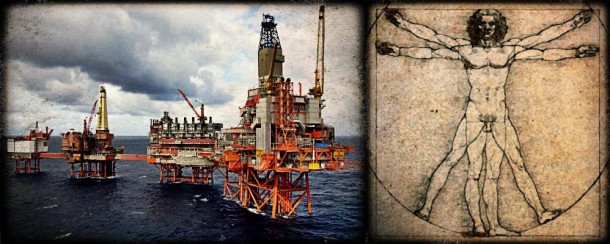
Offshore Workers 3D Body Scanning Project
A research to measure offshore workers’ body size with 3D scanners to inform the future design of safety equipment, survival clothing and space requirements on offshore installations has been launched in Aberdeen by Robert Gordon University (RGU). The research, which will generate an ongoing capability for measuring the size and shape of the offshore workforce, is the first of its kind in more than 25 years and is being led by researchers at Robert Gordon University’s Institute of Health and Welfare Research (IHWR) in collaboration with experts from Oil and Gas UK.
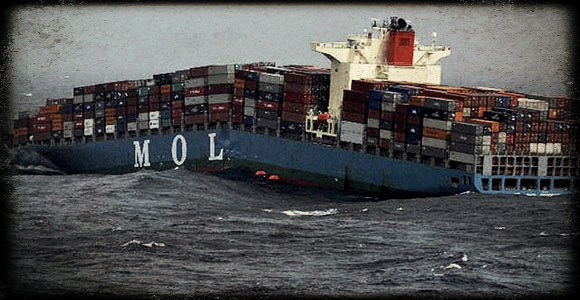
MOL Comfort Containership Sinks After Breaking in Two
It has been reported by the Indian Coast Guard and is widely spread in the media that MOL Comfort broke in two and sank in Arabian sea on 17 June 2013. The vessel was manned with 26 crewmembers who have been rescued by nearby vessels and are well in their health. The Bahamas flagged containership MOL Confort had a DWT of 90613 MT and a capacity of 8100 TEU.
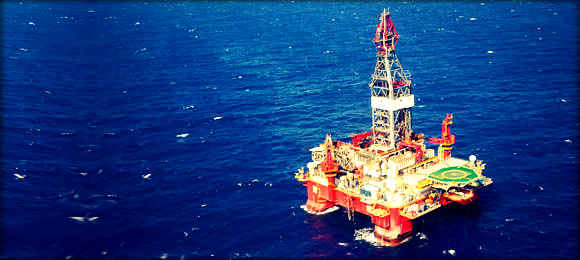
EU Approach on Safety of Offshore Platforms
Prevailing trends in the European oil industry, especially in the field of search, detection and extraction of hydrocarbon deposits (Upstream), show an increase of these activities in the coming years. The most – technological, institutional, business – advanced European North, has begun to decline after forty years of production and prepares … not just to pass the “baton” to the south, but to bring it themselves…
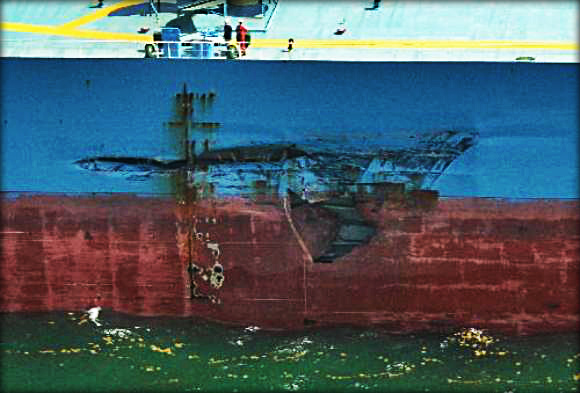
Tanker and Bulk Carrier Collide off Galveston
The Coast Guard is responding to a collision between two deep draft ships approximately 30 miles off the coast of Galveston today. There has been no report of injury or pollution from either vessel; however, both vessels are reporting damage but are in stable condition.




 Officer of the Watch