Seaborne Trade by Cargo Type During 2011-2012

United Nations Conference on Trade & Development (UNCTAD) releases every year an annual report with the aim of fostering the transparency of maritime markets and analysing relevant developments. This post refers to “The Review of Maritime Transport” for 2012 which covers data and events from January 2011 until June 2012. In this post we present an extract from the UNCTAD 2012 report regarding seaboarne trade by cargo type.
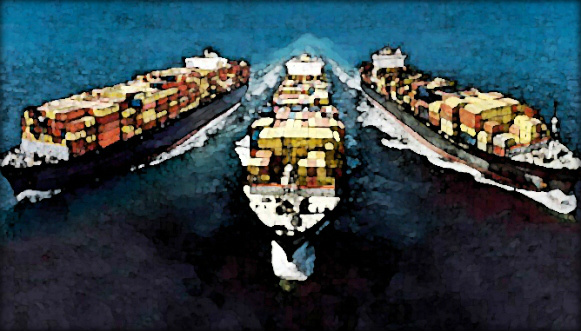
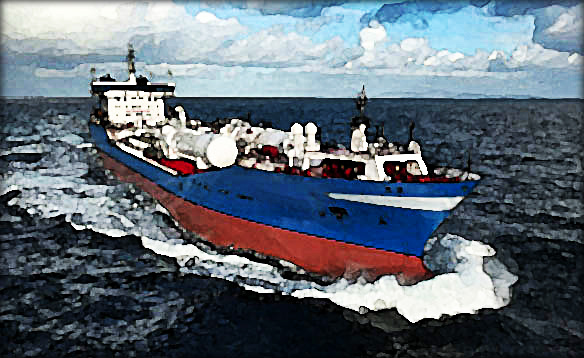
2013.10.09 - Seaborne Trade by Cargo Type During 2011-2012 Figure 1

[Read more…]

LNG – Strategic Challenge for the Mediterranean Shipping

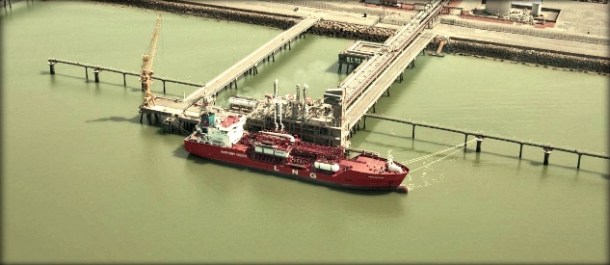
The approach of LNG is something rather new; it is the chicken and the egg issue. Do we need firstly the terminal, do we need firstly the fuel, do we have the appropriate ships? In order to take the decision, we need both the ships and also the terminals for LNG. I would like to highlight the important factors to be considered; social perception, financial issues, regulatory and authorization aspects, logistics scenario and the technical solutions.

2013.08.08 - LNG Strategic Challenge for the Mediterranean Shipping Figure 1

[Read more…]

Bonaparte LNG Project

HHI New LNG Storage Tank

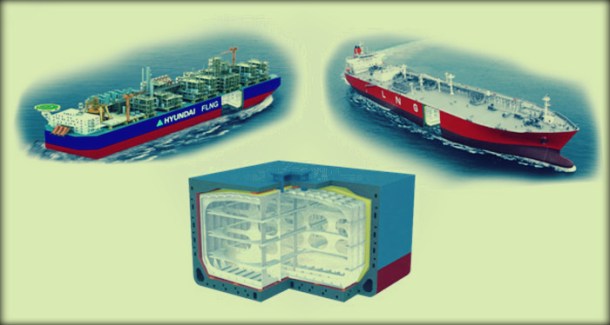
Hyundai Heavy Industries (HHI), announced at the end of November that it has developed an independent liquefied natural gas storage tank model, the Lobe-Bundle Tank. The Lobe-Bundle Tank uses ring-shaped plates instead of conventional flat plates to reduce the weight of the tank and building cost significantly. The tank is built using spray-type insulation rather than panel-type insulation, substantially reducing construction time.

2012.12.25 - HHI New LNG Storage Tank

[Read more…]

New LNG-Fueled Containership Design

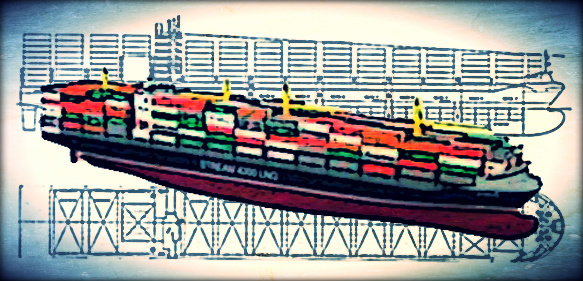
LNG-fuelled vessels promise a solution to many of the environmental challenges facing shipping over the next 30 years. To meet the needs to cut CO² emissions and maximize efficiency wherever possible, IPP Ingenieur Partner Pool developed STREAM, the new containership design for LNG-powered containerships. The concept, which has been assessed by GL and given a certificate of approval, is for a range of liner or feeder vessels from 3,000 TEU to 4,200 TEU for worldwide service.

2012.12.19 - New LNG-Fueled Containership Design Figure 1

[Read more…]

Study on LNG Bunkering in Ports

More stringent air emission requirements for seagoing vessels are introducing a new challenge for maritime administrations and services. These challenges are all the more daunting in the IMO ECAs. One of the possible solutions to compliance is the use of LNG as propulsion fuel for shipping, next to the use of low sulfur fuels and the installation of exhaust gas scrubbers. According to data from engine manufacturer Rolls-Royce, relative emissions for these various compliance options clearly demonstrate LNG propulsion as the overall environmental winner.

[Read more…]

Largest LNG ship in the world

ECA Retrofit Study

New International Maritime Organization (IMO) regulations require that all vessels sailing in the Emission  Control Areas (ECA) must reduce sulphur level in fuel oil to 0.1% or clean the exhaust gas to an equivalent level by 2015.

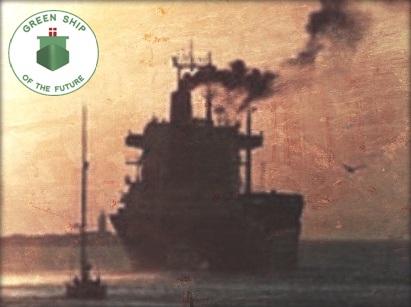
The Danish industry initiative, Green Ship of the Future, has concluded a study on comparing technologies that meet the International Maritime Organization’s emission levels for ships sailing in the Emission Controlled Areas (ECA).

The objective of the study was to compare the potential solutions able to meet the requirements of the IMO regulations  regarding SOX in the ECA in 2015 and globally in 2020. Similarly in 2020, the global requirements will be a reduction of sulphur content in the fuel to 0.5% or alternatively the equivalent level measured in the exhaust gas.


[Read more…]