ECSA Position Paper on CO2 MRV System

As an addition to the ECSA position paper issued in October 2013 on the  European Commission proposal for a CO2 MRV system on maritime transport, ECSA issued a position paper urging the EU legislators to refrain from extending the scope to ships above 400 GT and from including NOx/others GHG emissions which would respectively result in unnecessary administrative burden on small ships and in impractical monitoring issues in the proposed EU Regulation.

2014.03.13 - ECSA Position Paper on CO2 MRV System

[Read more…]

Fewer Pirates Different Risks: Africa Needs to Rethink its Approach to Maritime Security

With incidents of maritime piracy declining and greater awareness of new maritime security threats, the shape and governance of various counter-piracy initiatives and institutions will come into question this year.

2014.03.13 - Fewer Pirates Different Risks Africa Needs to Rethink its Approach to Maritime Security

[Read more…]

Use of Electronic Bills of Lading

A number of major dry cargo charterers began to invite owners to incorporate clauses into time charters in order to permit the use of electronic bills of lading instead of their paper equivalent.

2014.03.12 - Use of Electronic Bills of Lading

[Read more…]

Arctic Sea Shipping: Emissions Matter More Than you Might Think

Not so long ago, explorers risked their lives and the lives of their crews in search of the fabled Northwest Passage. Now the question is no longer if a route through the Arctic exists but how many ships will use the two routes now open each year along the northern coasts of Canada and Russia. Estimates for the possibility of making truly ice-free transits range from a few years to a few decades, but in the meantime, as evidenced by the hundreds of applications in 2012 and 2013 (495 successful applicants as of September 2013 to transit Russia’s Northern Sea Route, up from zero a mere five years ago), plenty of folks are willing to risk a little ice in pursuit of shorter shipping routes that were the goal of explorers since even before Lord Franklin’s famously lost expedition.

2014.03.12 - Arctic Sea Shipping Emissions Matter More Than you Might Think Figure 1

[Read more…]

HFO Main Fuel for Deep Sea Shipping for Years to Come

A new report from Lloyd’s Register (LR) and University College London’s Energy Institute, Global Marine Fuel Trends 2030, indicates that, in all scenarios, heavy fuel oil remains the main fuel for deep sea shipping while LNG develops a deep sea bunker market share of 11% by 2030.

2014.03.12 - HFO Main Fuel for Deep Sea Shipping for Years to Come

[Read more…]

Best Practice in Ships Technical Management

Quality and safety of operations, management and treatment of crew and transparency of costs spend are increasing. during 2013 GL and Fraunhofer CML experts conducted a study involving about 100 ship managing companies across the globe to find out what they are doing to improve their operations and what they consider as “best practice” in the industry.

2014.03.12 - Best Practice in Ships Technical Management

[Read more…]

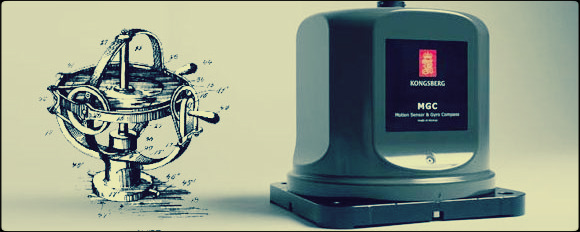
New Gyrocompass with INS Technology

Oceanology International 2014 sees the launch of a new range of Gyrocompass products based on the well proven Motion Reference Unit (MRU) technology from Kongsberg Maritime’s sensor ‘Powerhouse’, Kongsberg Seatex.

2014.03.12 - New Gyrocompass with INS Technology

[Read more…]

Suez Canal Toll Hikes Cause Protests from Shipping Associations

The Round Table of international shipping associations has protested against the third consecutive annual increases in Suez Canal tolls, saying carriers are “dismayed” by steep hikes with a short notice period.

2014.03.11 - Suez Canal Toll Hikes Cause Protests from Shipping Associations

[Read more…]

North American ECA Might Harm Short Sea Shipping

The North American Emission Control Area (ECA) proposed by the Environmental Protection Agency (EPA) would require that all vessels travelling within 200 nautical miles of the North American coast run off an ultra-low sulphur content fuel.

2014.03.11 - North American ECA Might Harm Short Sea Shipping

[Read more…]

Oil Resource Base Continues to Expand

Over the coming decades, energy sources will continue to evolve and diversify, driven by changes in technology, consumer needs, and public policies. On the other hand liquid supplies, referring primarily crude oil, are projected to remain the single biggest source of energy and vital to transportation.

2014.03.11 - Oil Resource Base Continues to Expand Figure 1

[Read more…]