A shipping company headquartered in Italy and the chief engineer of one of its ships were sentenced today in federal court in Mobile, Ala., for deliberately falsifying records to conceal discharges of oily wastewater from the ship directly into the sea. Giusseppe Bottiglieri Shipping Company S.P.A, was sentenced by U.S. District Court Judge Ginny Granade in the Southern District of Alabama to pay a $1 million criminal fine, serve four years of probation, and make a $300,000 community service payment to the National Fish and Wildlife Foundation. The company must also fund and implement a comprehensive environmental compliance plan during the term of probation. Chief Engineer Vito La Forgia was sentenced by Judge Granade to one month in jail.
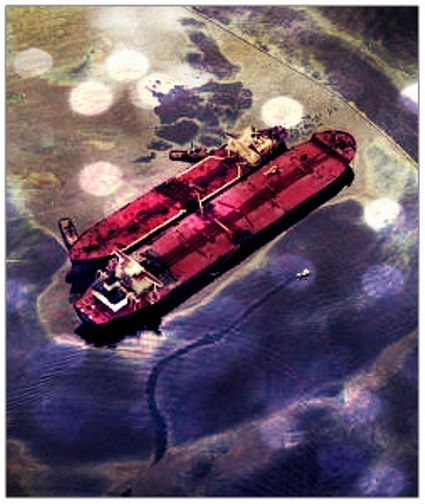
Ship Owner and Chief Engineer Sentenced for Illegal Discharges from Cargo Ship
Canada’s Interim Measures for Vessel Air Emissions
The NA-ECA enters into force on August 1, 2012, and would set a 1% limit on the sulphur content of marine fuel, followed by a 0.1% limit in 2015. The proposed Regulations would also implement a regime to control air emissions from Canadian vessels in the Great Lakes and St. Lawrence waters.
Due to significant additional discussions required with the domestic marine industry, the marine air emissions regulatory package will be delayed by a few months and will not come into effect on August 1, 2012, to implement the NA-ECA and standards for Canadian vessels operating in the Great Lakes and St. Lawrence waters.
Interim Guidance on the Non-Availability of Compliant Fuel Oil for the North American ECA
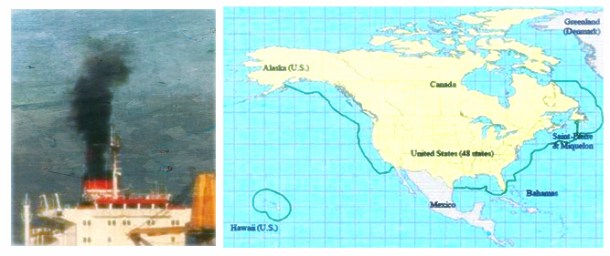
The U.S. Environmental Protection Agency released interim guidance for ship owners and operators clarifying how the U.S. government will implement fuel availability provisions when ships are unable to obtain fuel that meets standards protecting against sulfur pollution along the coast. Sulfur pollution has been linked to respiratory illnesses, particularly in at-risk populations including children, the elderly, and asthmatics. The International Maritime Organization (IMO) has officially designated waters off of the coast of North America, known as the North American Emission Control Area (North American ECA), as areas where stringent international pollution standards apply for ships, including fuel sulfur limits. The guidance provides background information on the North American ECA fuel sulfur standards, explains how owners and operators of vessels can establish compliance with these requirements, and describes how an owner or operator of a vessel who cannot obtain compliant fuel oil can make a fuel oil non-availability claim.
ECA Retrofit Study
New International Maritime Organization (IMO) regulations require that all vessels sailing in the Emission Control Areas (ECA) must reduce sulphur level in fuel oil to 0.1% or clean the exhaust gas to an equivalent level by 2015.
The Danish industry initiative, Green Ship of the Future, has concluded a study on comparing technologies that meet the International Maritime Organization’s emission levels for ships sailing in the Emission Controlled Areas (ECA).
The objective of the study was to compare the potential solutions able to meet the requirements of the IMO regulations regarding SOX in the ECA in 2015 and globally in 2020. Similarly in 2020, the global requirements will be a reduction of sulphur content in the fuel to 0.5% or alternatively the equivalent level measured in the exhaust gas.